Tuesday, May 6, 2014

Between Grass and Sky

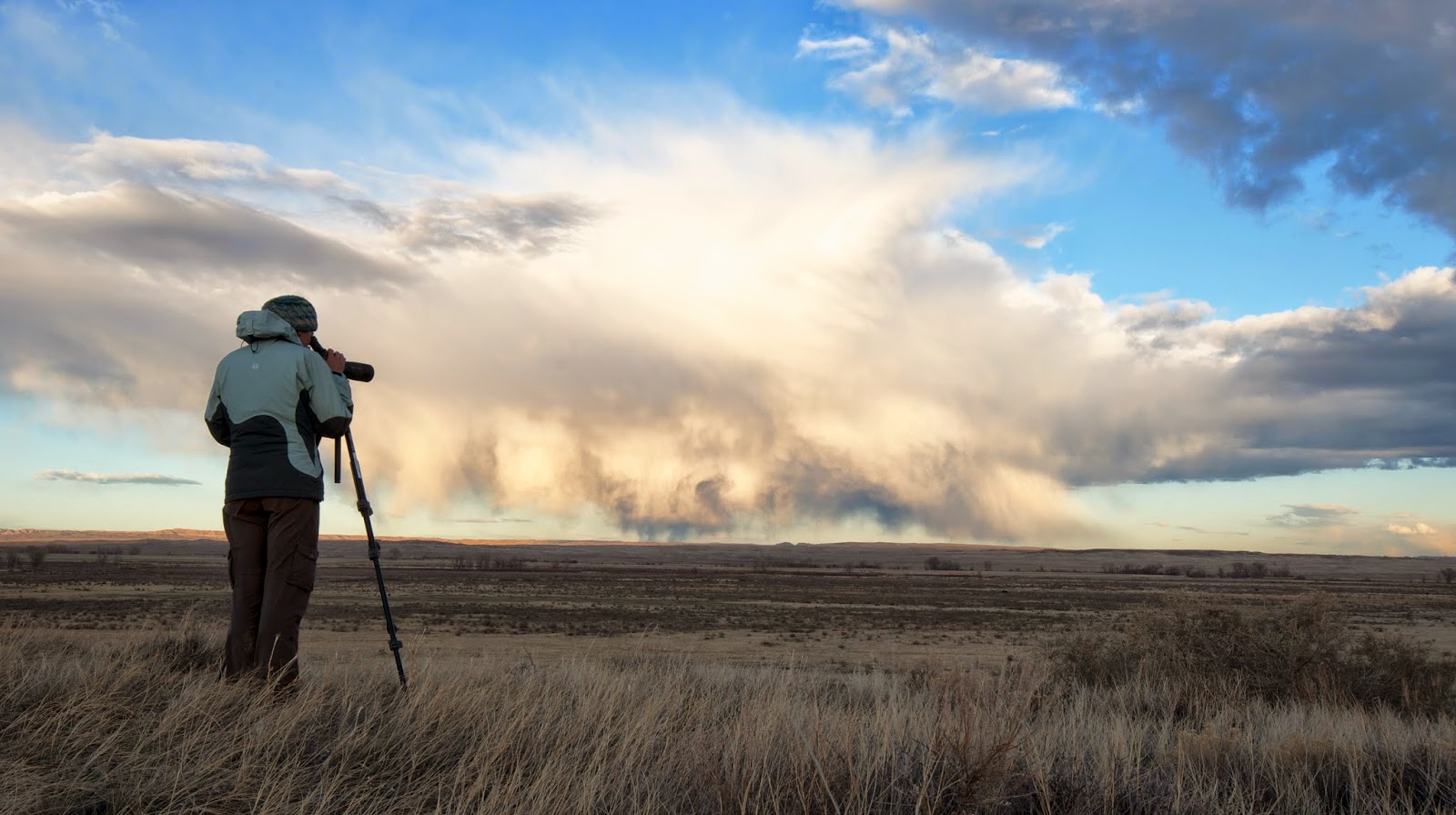
The Prairie is a landscape for the eyes; but even more so, it is a landscape for the heart.  Its vast and sweeping horizons carry so much cultural and biological weight that the eyes become only a trigger for the mind.  To look out onto the high plains of Montana is to dream of a rich past, to imagine an unmarked future, and to feel the significance of the present. The land is big, rugged, and unforgiving. It requires people to adapt, and it works only  with those who embrace its challenges and hostilities. For those people and animals willing and capable, the prairie shows its splendor. To those who choose to ignore its nature and fight against it, the prairie shows its callousness   


Since its settlement, the Hi-Line has been the edge of the world. In the late nineteenth century, it was outlaw country.  Few people, places to hide, and the Northern Pacific railroad lent itself to being a haven for the man-on-the-run.  Known notorieties, like Jesse James, Buch Cassidy, and the Hole in the Wall Gang, found safety  here.  Brave homesteaders, inspired by big, open spaces and the endless potential of hard-work,  drifted to the region to make a go-of-it.  Dust Bowl hardships, economic difficulties, Eminent Domain,  and a hostile climate took its toll on the farming and ranching communities of the northern plains. Today, only the persistent, tough, and creative people remain on the landscape. Alongside them, only the hardiest of creatures, both wild and domestic, thrive here. 


The severity of the land and the scarcity of human existence,  has fostered a  tough, but caring society. Despite miles between residences, people here are, unified, charitable, and social.  Families will travel far on rough gravel roads to help extinguish a fire,  brand a neighbor’s herd of cattle, or simply to say "hi". 


This is a landscape that binds people with people and people with animals.  A nexus of mutual dependence and self-reliance is a thread running through this open country. Here, stuck between sky and grass, lives a deep relationship. This connection between people, animals, and the land is one that few in this century know.


The Montana Prairie is a landscape for a special type. Those looking for solace; The Rancher, the Cowboy, The biologist, the adventurer, can find it on the Hi-Line. Here, a love for the land and room to roam  keeps the heart pumping, the mind dreaming, and the hands working.


Thursday, May 1, 2014

A Lot of Grass

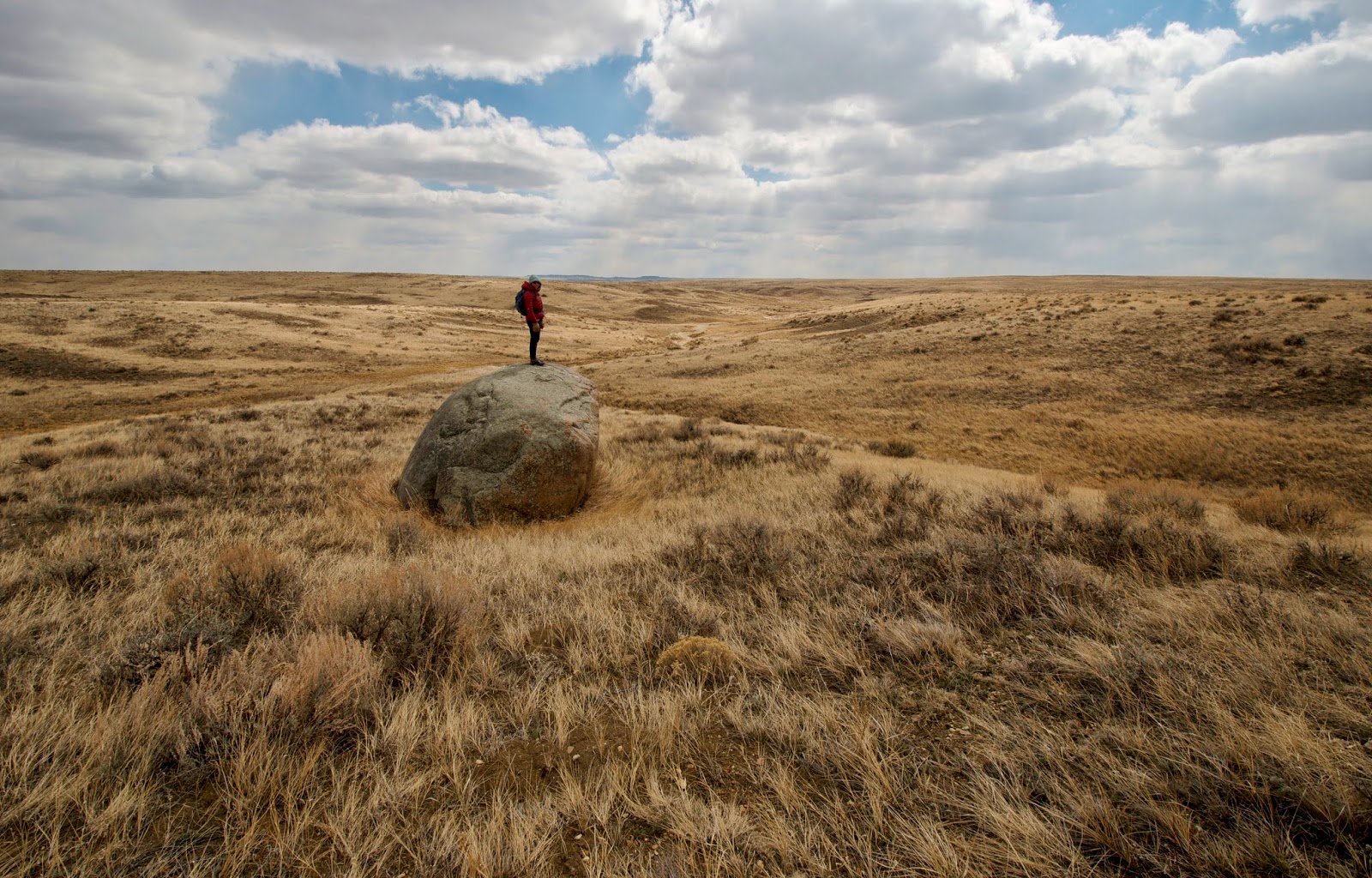
Take it to the ground level. Ditch the car. Weave through the sage brush, cut through the coulees, sit still in seas of grass.  Hike, bike, run, wander.  Lie beneath the big sky, and drink in the stillness of the high-plains. We evolved, as a species, to walk the savannah. This is what we were built to do. 


Some think that the plains is nothing but a lot of grass. Well, a lot of grass, it is. There is tall grass, and small grass, rough grass, and soft. There is grass with cotton tufts, and grass with razor edges.  Thankfully there is a lot of grass.  With such an abundance, comes  a whole lot of running, breathing, throbbing life.  

prairie dog town


a closer look


Saturday, April 19, 2014

A Dream Realized


I dreamt of dust. I dreamt of thunder. Just as the stars in the heavens cannot be counted,  the beasts  before me were too numerous to number.  The land  trembled as hooves struck earth, with one-ton masses of shear muscle and resolve riding high. The air was thick with scent and heat and wild energy.  The american bison, the buffalo, had returned to the prairie.


What if it were true? What if the great herds of buffalo returned to the landscape, and with them, in quick succession, the entire prairie ecosystem as we once knew? What if vast herds of pronghorn and elk, bear, and wolf, were no longer pushed into the mountains but could, instead,  roam free, as they did for millennia? What if the people of the plains; the Asiniboine, the Gros ventre, the Crow, the Blackfeet could  walk their ancient stomping grounds? What if the ranchers, and stockmen, and hard-working homesteaders of the plains could carry on, under a big and open sky, the traditions of their grandfathers?Perhaps, we would rediscover our American identity.


From an old and painted bison horn thick whisps of burning sweetgrass and Tobacco curled into a ribbon of sacred smoke. Clutched in the hands of a young Asiniboine boy, the gift to the spirit was held steady. A slow beat on the skin of a drum sounded. An elder's prayer rose with the fragrant offering, high above the animals, and high above all people. It was time for them to return to their home.  


"I see the Ghost Dancers' prayers being answered," exclaimed an elder as the gate opened and seventy-three direct descendants of Northern Montana Bison charged into the sage. This was a special day on the Montana prairie. This group of yearlings belong here. Over one-hundred years ago the bison were eradicated from the region. A lucky few were spared and stashed away in Elk Island National Park, Canada. Today, nearly a century later, these genes have returned to their rightful home on the Hi-line.


 There are now nearly 500 wild bison roaming the Sun Prairie of Northeast, Montana.


                                                  aproaching a small herd

Sunday, April 6, 2014

An introduction to the Prairie

They call it the Hi-line. A vast expanse  of Montana plains,  stretching from the Rocky Mountain-Front eastward along the Canada line.  Grass, wind, and people as tough as their boots characterize the region. Beneath an austere and desolate facade hides an intricate  and beaming existence.


Friday, March 28, 2014

storm in the valley

To watch a storm descend on a valley is to watch humanity as it is humbled. Yes, it is that dark, almost black shade  of a sky that  makes us gulp. Sure, it is a tearing wind, charging through distant trees, that makes us hold our breath. But, it is that depth and texture of the blackness; the obvious, lumbering, crushing weight of the sky that humbles us. The sheer bombast of  nature in these moments reminds us of our insignificance.  To watch such a scene unfold is to wonder at the sublime. 


This  moment of sublime, of natural grandiosity, of fright and beauty,  beckons for the return of figures like that of the great romanticist and transcendentalist movements.  Turner, Homer, Cole , Whitman, Emerson, and Thoreau; these men reminded us of the scale of things, of our size, of nature’s unwavering ability to overwhelm us with awe and respect.